
Why Your OpenAPI Spec Drifts (and How to Catch It)
· The Routebase Team
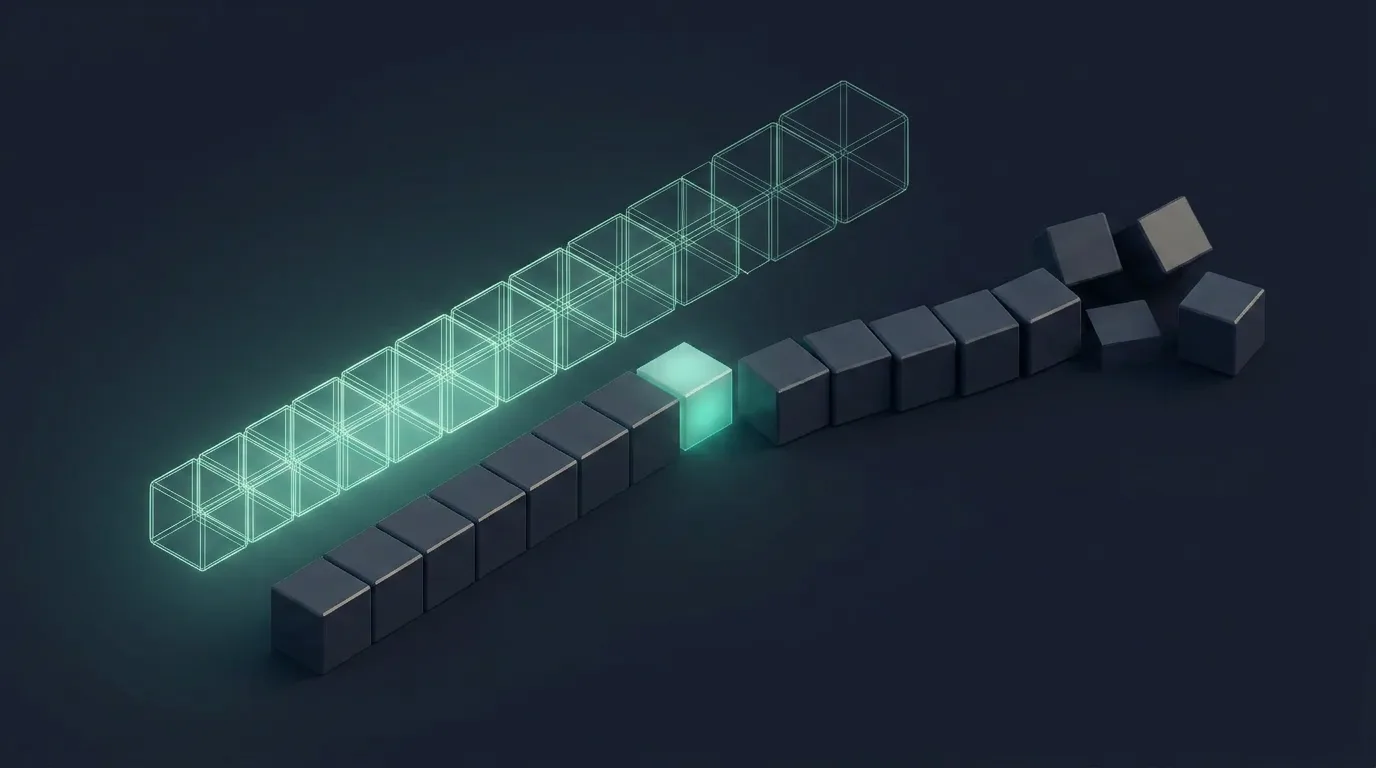
Every team with an OpenAPI spec believes the same comforting story, which is that the spec describes the API. And on the day it was written, it did. But specs and implementations are maintained by different forces, one by discipline and the other by deadlines, and the moment nothing enforces their agreement, they start to diverge.
That divergence has a name, contract drift. It's rarely dramatic. Nobody deletes an endpoint from the spec while it keeps serving traffic. Instead, a field quietly becomes nullable. An enum grows a value. An error response changes shape. Each change is small, defensible, and invisible, until a consumer built against the spec meets the API that actually exists.
The four ways specs drift
Drift isn't one failure mode. In practice it's four, and they have different causes and different fixes.
1. The hotfix that never made it back. Production is down, someone patches the handler, the incident closes, and the spec still describes the old behavior. This is the most common source of drift and the most forgivable, because under pressure, the spec is nobody's priority. The problem is that "we'll update it later" has no owner and no deadline.
2. The undocumented addition. A new field ships because a frontend needed it. It works, everyone moves on, and the spec never hears about it. Additive changes feel safe, because no consumer breaks today, but every undocumented field is behavior consumers will discover, depend on, and treat as contract. Now you have an API surface you never designed and can't safely change.
3. The generator gap. "We generate the spec from code, so it can't drift." It can, because it just drifts differently. Generated specs faithfully describe your DTOs and routes, but the contract is more than shapes. It includes validation rules living in handler logic, error responses produced by middleware, fields serialized conditionally, and side effects nobody annotated. The generated spec is precise about what the framework knows and silent about everything else, and the silence reads as documentation.
4. The multi-consumer fork. The mobile team works from the spec in the repo. The partner integration got a YAML export from March. The mock server the frontend develops against was configured by hand in April. There is no single drifted spec. There are several versions of the truth, and every consumer is right according to one of them.
Why you don't notice until it hurts
Drift has a perverse property, because it's cheapest to fix when it's invisible and most visible when it's expensive. A stale description costs nothing until a new team member builds against it or a client SDK gets regenerated from it. Increasingly, the reader is an AI agent that reads it as ground truth and calls your API exactly as documented. Agents have made drift more expensive overnight. A human integrator notices when reality disagrees with the docs and works around it, while an agent trusts the contract completely and fails in ways nobody debugs for hours.
The instinctive answer is process, meaning "update the spec with every change" as a review checklist item. It fails for the same reason all unenforced process fails, because it depends on the person under the most time pressure remembering the step with the least visible payoff. Checklists don't catch drift. Machines do.
Catching drift mechanically
The teams that keep specs honest all converge on the same principle, which is that the contract must be checked against reality by something that never gets tired. There are three layers, in increasing order of confidence.
Diff every change. Treat the spec like code, so every modification produces a diff, and breaking changes such as removed fields, narrowed types, and new required parameters are flagged before they merge, not after a consumer reports them. This catches drift within the spec's own history.
Validate responses against the schema. Contract tests take each documented endpoint, call the real implementation, and check the response against the declared schema. Undocumented fields, surprise nullables, and changed error shapes surface as failing checks instead of consumer bug reports. This is where the generator gap and the hotfix gap actually get caught, and it's why we built schema drift checks and contract monitoring into Routebase. The same spec that renders your docs is continuously checked against live responses, and violations show up as findings, not folklore. The mechanics, and where a contract test stops and an integration test starts, are in Contract Testing vs. Integration Testing, and the production half of it is contract drift monitoring.
Make the spec the artifact everything derives from. Mocks, docs, SDKs, and tests generated from one spec can't fork from each other. The OpenAPI guide walks through what actually comes out of one document, and this is the design-first argument in its most practical form, not as an aesthetic preference, but as the only structure in which "update the spec" and "change the API" are the same act.
The test that settles it
Here's a diagnostic you can run this week. Take your spec, generate a client from it, and run that client against production. Every failure is drift you already have, and you just hadn't paid for it yet.
A spec that's checked against reality is a contract. A spec that isn't is a rumor with a version number. The difference isn't how carefully it was written. It's whether anything breaks when it stops being true.